Build an Airbnb clone: a vacation rental booking MVP
The difficult part of a vacation rental clone is agreeing on who has which nights at which price. Build one small rental inventory with real date rules before adding maps, reviews or payments. This guide turns that goal into a practical reservation model.
By Clone4.me · AI-assisted editorial ·
A practical starting point
Our starter brief proposes Django/PostgreSQL and a TypeScript interface. Keep availability and pricing authoritative on the backend, treat checkout as exclusive, and test simultaneous booking attempts. The pilot excludes real money and host payouts.
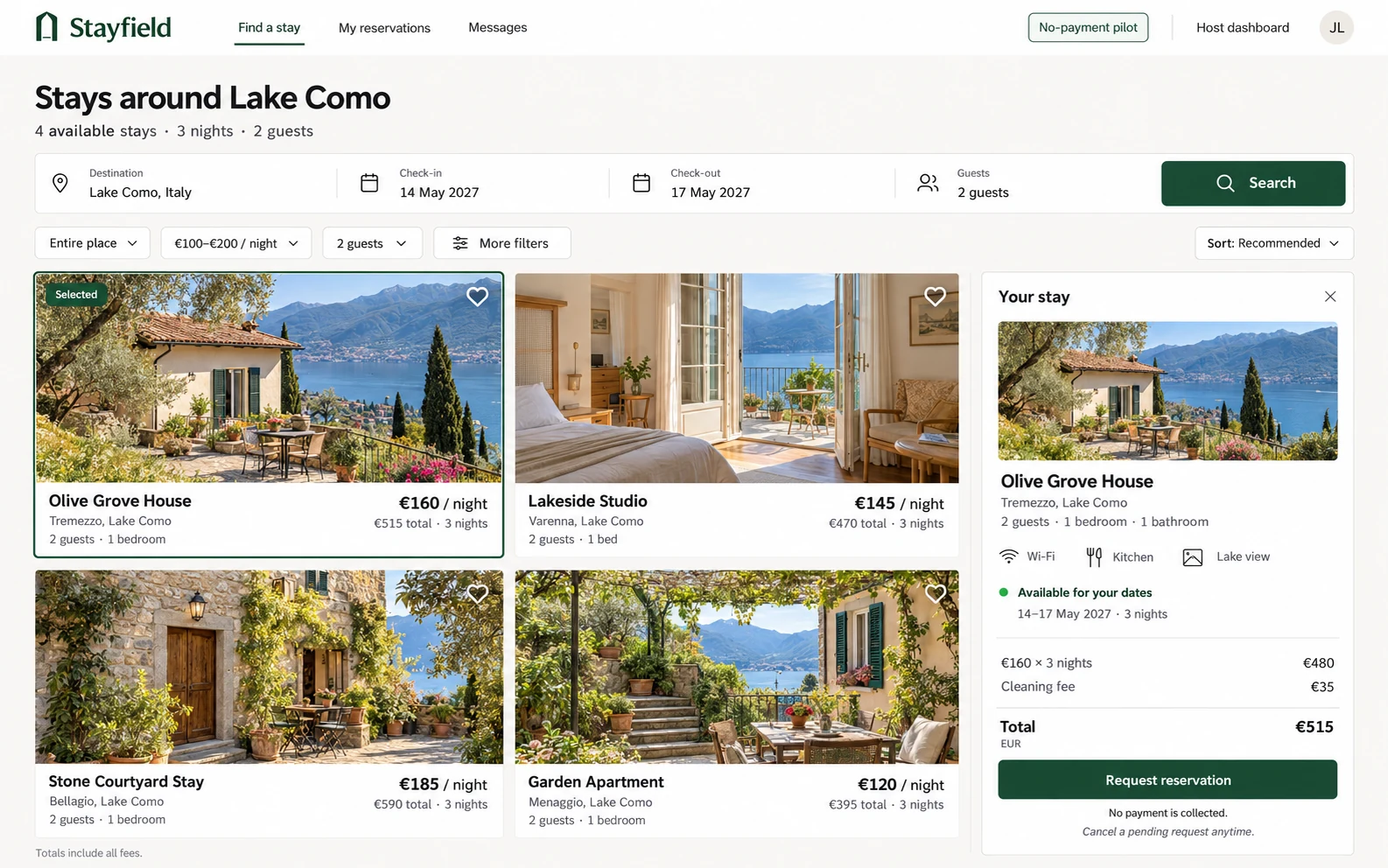
Choose a narrow rental marketplace
A club’s weekend cabins or a small portfolio of holiday properties is a clearer starting point than a global marketplace. Give guests listing details, a date range, a quote and a reservation. Give hosts ownership-checked listing edits and an availability calendar.
Define one currency, occupancy limit, fee rule and cancellation policy. Avoid showing synthetic review scores or fabricated host verification. Original sample listings should use your own or permitted photography. An attractive property grid is a useful interface, but the build is incomplete until reservations persist and competing requests cannot take the same nights.
Model nights with an exclusive checkout
For a stay from November 10 to November 12, the occupied nights are November 10 and 11. The guest leaves on the 12th, so a new stay can begin that day. Representing this as a half-open interval makes adjacent bookings easier to reason about. Use calendar dates for overnight occupancy rather than silently converting them through a browser timezone.
Put occupancy protection at the database boundary. PostgreSQL supports date ranges and exclusion constraints for overlap rules. A disabled date picker only improves the interface; it cannot prevent two requests that saw the same previously available dates. Test reservations and host-created blocks against the same policy.
References: PostgreSQL date ranges and non-overlap constraints
Keep the price quote and hold lifecycle explicit
Calculate the quote on the server from nights, currency, rate and fees. Store the accepted quote snapshot with the reservation so a later listing-price change does not rewrite history. Give provisional holds an expiry and a single transition into confirmation or release.
A workable first state model is available → held → confirmed, with explicit cancellation and expired-hold paths. The exact model is a design choice, not a claim about Airbnb’s internal system. Decide which states block inventory, which actor can transition them and how retries are handled.
| Record | Critical rule |
|---|---|
| Availability block | Host-owned and checked against active occupancy |
| Quote | Server-calculated, expiring, currency-specific |
| Reservation | Guest-owned with a fixed accepted quote |
| Hold | Expires and releases inventory once |
| Listing photo | Validated upload with owner-only changes |
Prove bookings before adding checkout
Open two guest sessions and send the same date request at once. Exactly one active reservation should acquire the inventory. Then test an adjacent stay, a blocked night, a stale quote, cancellation and retry after a simulated network interruption. Verify the final state after reloading both sessions.
Try editing another host’s listing through its API endpoint. Upload an invalid image. Make sure an unavailable property stays unavailable after an app restart. These checks are a better readiness signal than a list of future marketplace features. Real payments, payouts, insurance and local rental operations remain separate work.
- Keep originals and audit records when a listing changes.
- Show a clear conflict response rather than a generic checkout error.
- Separate booking state from any later payment-provider state.
AI prompt, clone script or maintained service?
Use the Airbnb brief when you want original source and a deliberately small workflow. A ready-made vacation rental clone script can reduce initial assembly, but only if its license, dependency updates, reservation rules and support fit your needs. A maintained booking service may be more practical when you need reliable operations immediately.
Customize the complete brief with your inventory and fee rules. For a single-merchant catalog, Shopify is a closer reference; for a service-delivery marketplace, compare Fiverr. Do not expand a rental data model into unrelated commerce workflows just because all of them have listing cards.
Use one currency and an exclusive checkout date. Store the accepted quote with each reservation. Define inventory-blocking states, hold expiry and idempotent cancellation. Demonstrate two concurrent requests for the same property/dates with exactly one successful reservation. Keep payments in test/no-payment mode.
Turn the plan into a complete brief.
Copy a tool’s full prompt, customize its sections, and keep the verification requirements with your project.